

Species Introduction
Learn the basics, the taxonomy, about their colouration and their anatomy which makes them, them!
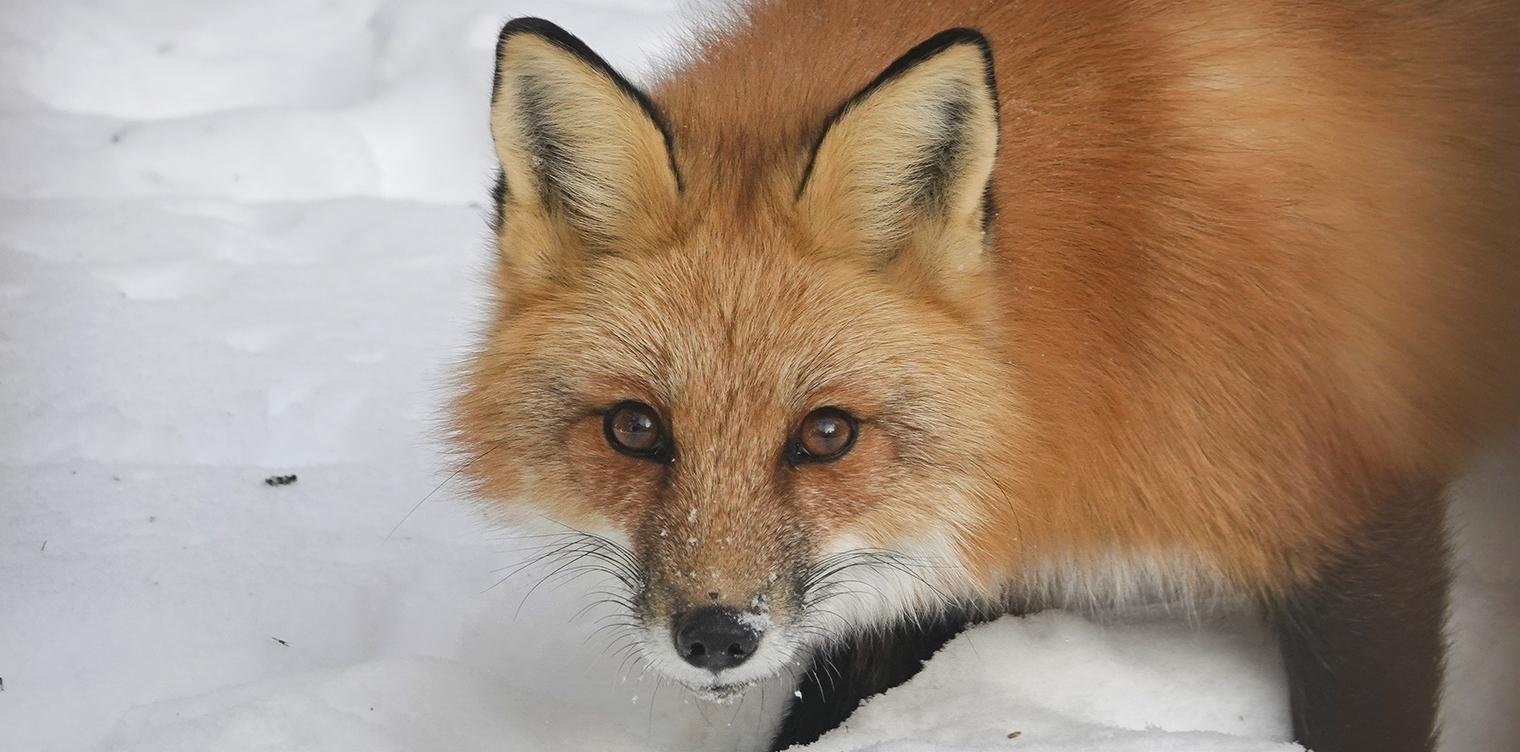
The Foxamentals
Red foxes are endothermic, placental mammals with bilateral symmetry that live up to 12 years in captivity and generally live to 3 years in the wild (Fox, 2007). Most red foxes are solitary animals, but they may form family groups that share earthen dens and other emergency burrows within a range/territory (Fox, 2007). Large dens are used for winter and for birthing and raising pups; these dens are generally used over generations (Fox, 2007). These mammals are terrestrial and can be nocturnal or crepuscular, so they are mostly active during dark hours (Fox, 2007). They can reach speeds of around 48 km/h and can leap as high as 2 meters (Fox, 2007).
Image I: Wild Adirondacks, 2021
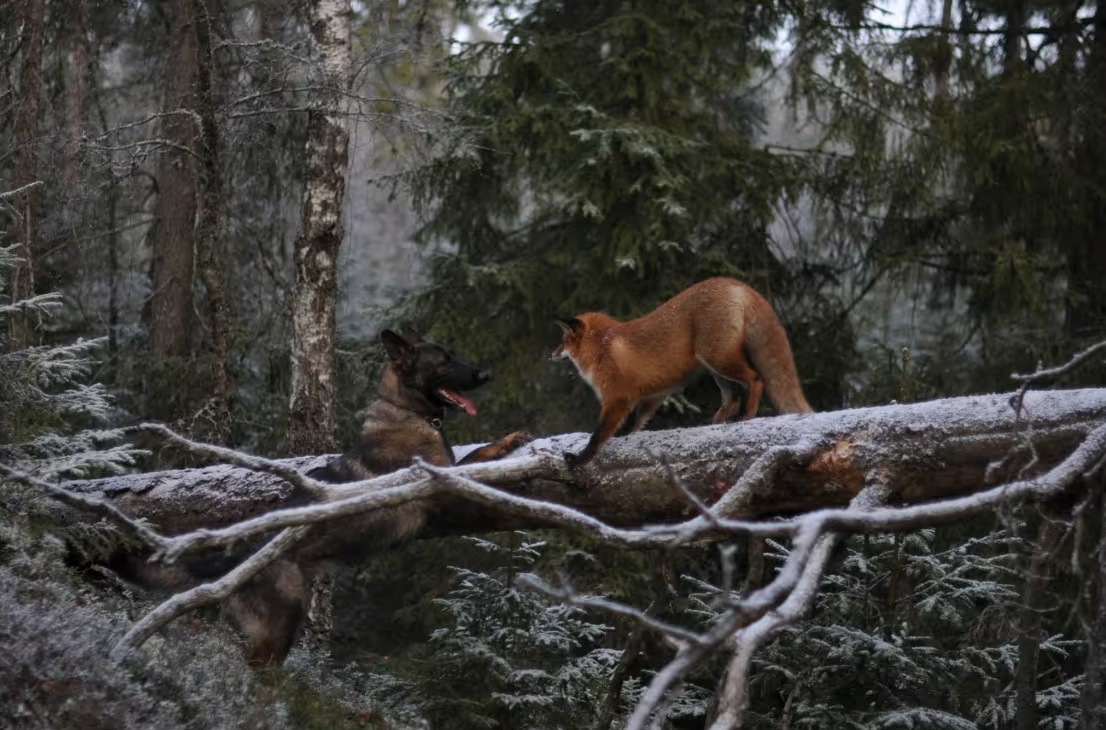
A Fox by Any Other Name
Scientists classify living and extinct organisms into various categories. They do this mainly to understand evolutionary relationships, to communicate clearly, and to protect biodiversity. For the red fox it is as follows:
Kingdom: Animalia
Phylum: Chordaya
Class: Mammalia
Order: Carnivora
Family: Canidae
Tribe: Vulpini
Genus: Vulpes
Species: vulpes
(Baldwin, 2021)
Image II: Today, 2013

Fifty Shades of Fox
Red foxes, despite their name, can range in colour from pale yellowish-red to deep reddish-brown on their upper parts and white, ashy, or slate on the underside (Fox, 2007). They generally have black on the lower part of their legs and either black or white on the tip of their tail (Fox, 2007). For crosses, there are two main colour variants: reddish-brown fur with a black stripe down the back and shoulder, or strong silver-to-near-black colouring, more commonly known as a silver fox (Fox, 2007).
Image III: Maria Argiroudaki / Pexels (Stock image)
Big Ears, Bright Eyes & Bushy Tails
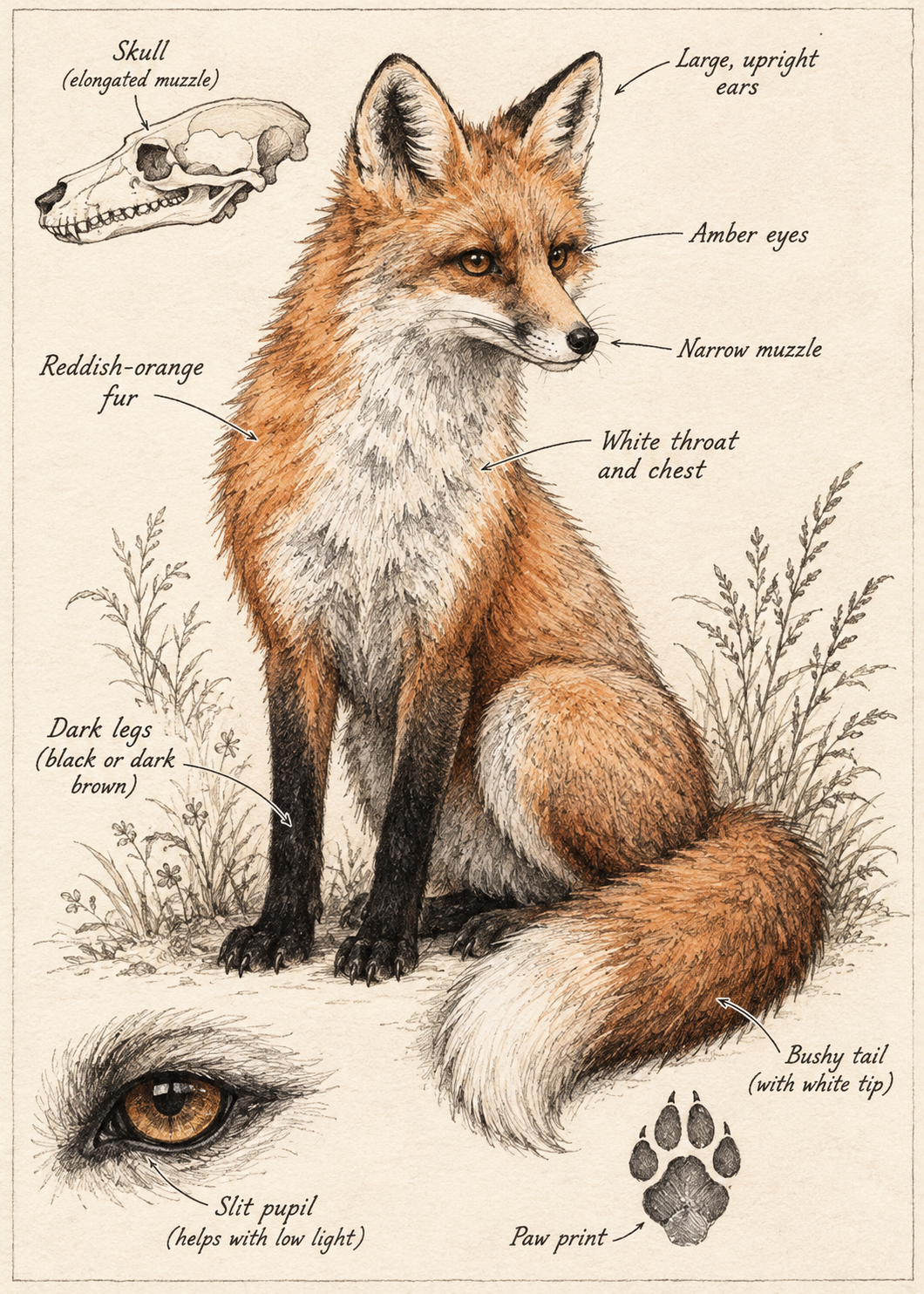
Mature red foxes have yellow eyes, a dark brown or black nose, and pointy, black-tipped ears that allow acute hearing (Fox, 2007; Can Geo Staff, 2022). Their hearing is so good that they can detect a mouse's squeak from 30 meters away (Can Geo Staff, 2022). Their yellow eyes also increase the intensity of the images most other animals see, allowing for adapted night vision (Can Geo Staff, 2022).
Their teeth take up more than half the length of their skull, with simple, pointed premolars, except for the upper fourth premolars, which are carnassials (Fox, 2007). Their teeth emphasize crushing and demonstrate that they are hunters (Fox, 2007).
Moving from the head, the front paws (manus) have 5 claws, while the back paws (pes) have 4; they differ only in the first digit, also known as the dewclaw (Fox, 2007).
Among the Vulpes genus, red foxes are the largest, with a head-and-body length ranging from 455-900 mm, a tail length from 300-555 mm, and a weight from 3-14 kg (Fox, 2007). Within these ranges, males are generally larger than females. furthermore, European populations are generally larger than populations in southern deserts and those in North America (Fox, 2007).
Thanks to their long, bushy tails, red foxes can balance well, communicate with each other, and keep warm by wrapping them around themselves in cold weather (Can Geo Staff, 2022).
Image IV: StockCake
Create Your Own Website With Webador